Keynote Article: Sanctifying the New
Dr. Sarah Shulkind
The seeds of school-wide innovation are so often planted by our children, and Beit AI is no exception. It was from conversations with and observations of our students that we first felt the seismic shift of AI, and it was from our students that we understood early on that we had two distinct choices when it came to generative AI: We could embrace it or we could resist it. Most schools, at the time, were doing the latter.
Resisting generative AI, from the beginning, seemed like a losing battle, and one from which its incipience did not seem educationally plausible nor educationally sound. From talking with our students, we learned the power of the tool, the ways that it could act as a co-worker, a coach, and even a tutor. Teachers, too, noticed its power to differentiate, to give real time feedback, and to develop adaptive, personalized practice sets for students.
“Beit AI is where Jewish tradition meets technological innovation, empowering students, educators, and families to explore AI as both a tool and an ethical frontier.”
So, from generative AI’s arrival on the educational landscape, Milken decided to embrace it as we have embraced other current trends, within the framework of more than 2000 years of Jewish values and texts and within the context of core machloket that have shaped who we are as a school and who we are as a people. We decided to embed both the conversation about generative AI and implementation of it in the context of – and often in tension with – our ancient teachings and the iterative wisdom of our Jewish traditions. And thus, in 2024, Beit AI was born.
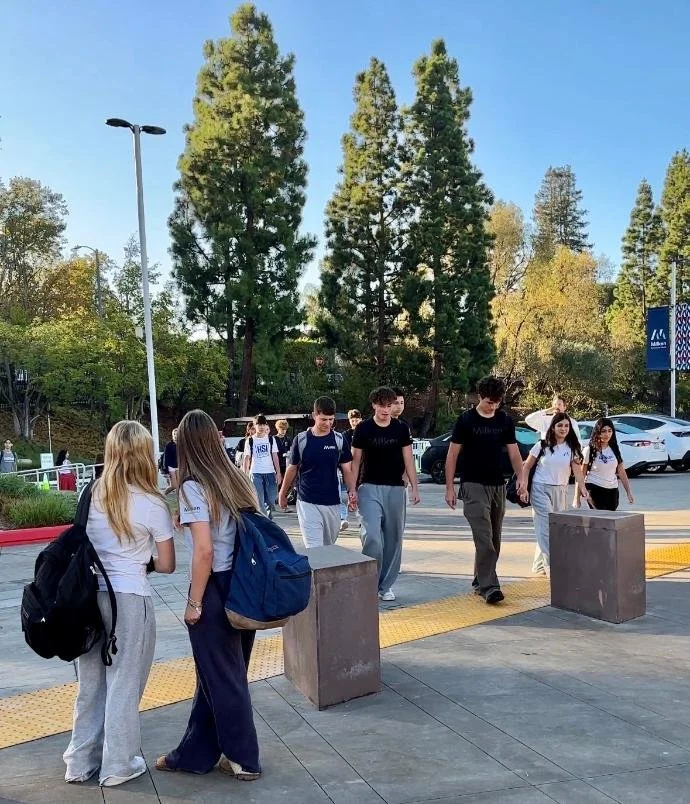
Over the last two years, we have worked with our students, faculty, parents, alumni and broader community to build a house of learning, wonder, and responsibility — where Jewish tradition and artificial intelligence grow side by side. Bayit, meaning “house” in Hebrew, represents a home for inquiry, creativity, ethics, and pluralistic Jewish thought. Beit AI is where Jewish tradition meets technological innovation, empowering students, educators, and families to explore AI as both a tool and an ethical frontier.
Beit AI, from its inception was created to facilitate our educational philosophy, enhance our portrait of the graduate, and further our mission. In other words, Beit AI’s charge from the beginning is that generative AI could be our what and even our how at times, but it would never be our why.
As we considered this charge, we studied a text by Rav Abraham Issac Kook, the first Ashkenazi Chief Rabbi of pre-state Israel and a foundational thinker in the late 19th and early 20th centuries who famously said, "The old shall become new, and the new shall become holy." Rav Kook’s phrase offers a vision of renewal and sanctification, suggesting that knowing the past and using it as a foundation for new initiatives could lead to sacred work.
In pursuit of both renewal and sanctification, Beit AI asks how students, teachers, and parents can engage AI while preserving human dignity, strengthening ethical judgment, and preparing for the future our students will inherit. To operationalize the ambitious aims of Beit AI, Milken developed three guiding principles:
-
Explore what it means to be created b’tzelem Elohim (in the image of God) in a world increasingly shaped by intelligent machines, ensuring that technological progress reflects and preserves human dignity.
-
Use Jewish law (halakhah) and moral reasoning to guide how we create, employ, and respond to artificial intelligence—grounding innovation in responsibility and justice (areivut).
-
Educate students to balance intellectual achievement and technological fluency with talmud Torah, shavat vayinafash, and moral courage—preparing them to lead with wisdom in an AI-driven world.
These three principles and the Rav Kook text connect to a central insight from the epilogue of Ethan Mollick’s industry-leading book Co-Intelligence. Mollick writes, “There is a sense of poetic irony in the fact that as we move toward a future characterized by greater technological sophistication, we find ourselves contemplating deeply human questions about identity, purpose and connection. To that extent, AI is a mirror, reflecting back at us our best and worst qualities. We are going to decide on its implications, and those choices will shape what AI actually does for, and to, humanity.”
Milken’s exceptional value has always been the ways we challenge our students to contemplate deeply human questions about identity, purpose and connection, questions the Jewish people have wrestled with throughout our history, and questions which have challenged our people in different ways depending on the context around us. AI is the latest frontier in this wrestling, and it is our job at Milken to make sure that for this new frontier our students, buttressed by the wisdom of Am Yisrael, are uniquely equipped.
These three principles and the Rav Kook text connect to a central insight from the epilogue of Ethan Mollick’s industry-leading book Co-Intelligence. Mollick writes, “There is a sense of poetic irony in the fact that as we move toward a future characterized by greater technological sophistication, we find ourselves contemplating deeply human questions about identity, purpose and connection. To that extent, AI is a mirror, reflecting back at us our best and worst qualities. We are going to decide on its implications, and those choices will shape what AI actually does for, and to, humanity.”
Milken’s exceptional value has always been the ways we challenge our students to contemplate deeply human questions about identity, purpose and connection, questions the Jewish people have wrestled with throughout our history, and questions which have challenged our people in different ways depending on the context around us. AI is the latest frontier in this wrestling, and it is our job at Milken to make sure that for this new frontier our students, buttressed by the wisdom of Am Yisrael, are uniquely equipped.
About the Author
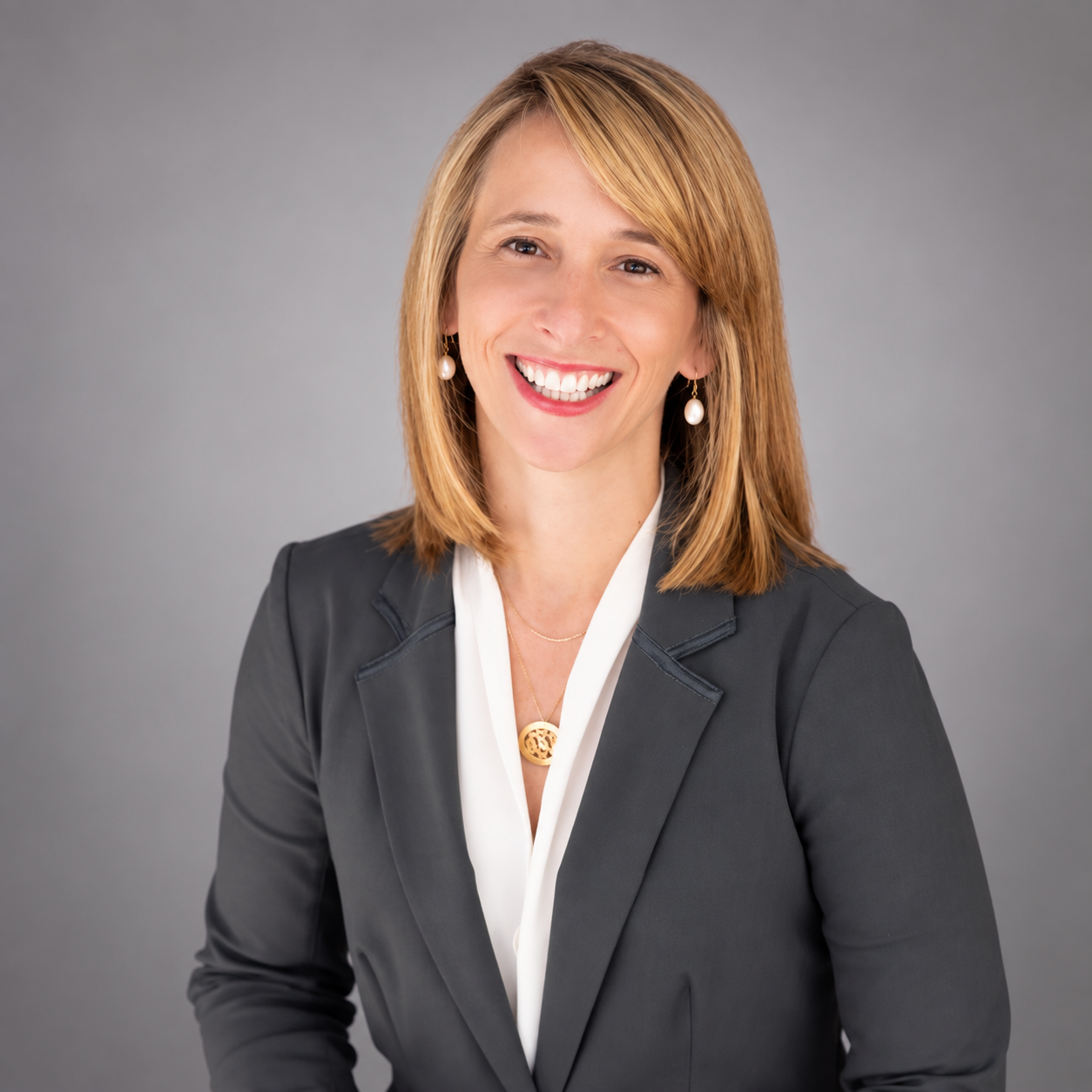
Dr. Sarah Shulkind has served as Head of School at Milken Community School since 2019, leading a nationally recognized independent Jewish school serving more than 775 students in Grades 6–12. Previously, she served as Head of School at Sinai Akiba Academy and as Milken’s Middle School Director. A respected educational leader and published scholar, Dr. Shulkind is president of the California Association of Independent Schools Board of Directors and serves on the boards of Camp Ramah in Wisconsin and Curtis School.
